Showing posts with label World War II. Show all posts

Sunday, May 14, 2017

Happy Mother's Day!

This will be a brief post, as it's Mother's Day here in the United States, and it's a beautiful day outside! I am anxious to start my day by enjoying my lovely patio and getting a little reading done.

I have two books for you this week. One is a debut novel by a new author and the other is another book by an author who feels like...family.

Debut

Lilac Girls, by Martha Hall Kelly, is a great book to read if you're a fan of historical fiction set in World War II. Kelly stayed as close to the real, actual events as possible, using her research to guide her story. The novel is special because it is told from three people's very different perspectives. Caroline is a New York socialite who works at the French consulate, Kasia is a Polish teenager taken captive by the Nazis, and Herta is a German doctor determined to make her mark in the male-dominated Nazi regime. 

This book was chosen by the new book club I joined. When we met to discuss it this past week, the consensus was the same: we all enjoyed the book and none of us had ever read a novel that gave a voice to a German doctor from World War II. We agreed that all three narrators were good ones and gave us a lot to consider we had not thought of before. One of the ladies in my book club is Polish, and she said she learned things she did not know before about the Polish people in World War II. It was an interesting and absorbing novel. I read it in three days.

Family

My love for Joshilyn Jackson continues, as I just finished The Girl Who Stopped Swimming. She is, as I have described before, amazingly talented at pinpointing how some older Southern women act, talk, think, and...have a tendency to not want the world to see their reality (and, too often, they don't even see it themselves). For them, it's all about what it looks like on the outside and not what it truly is on the inside. 

This novel surrounds a tragedy, how people react to it, and the truths hidden behind the facade of a nice neighborhood. Because of the tragedy, the main character, Laurel, is forced to analyze her own life a little closer. She struggles with something terrible in her own past, as she tries to deal with something terrible in her present. The action builds as Laurel tries to find answers to both before she loses her mind. She is haunted in many ways and must find her own way through a reality that others deny.

I have to say, I was surprised to find some people didn't like it on Goodreads. I looked at reviews  after I posted mine. I found myself wondering if they read the same book I did. I guess we all connect to books in different ways, and I definitely connected with this one. Maybe you have to acknowledge the superficial level many people live on to appreciate a story that reveals the possibilities of what may be underneath it all and seeks to answer why they choose to live that way. I think Jackson did an excellent job at that. She always does. Like I've said before, I'm pretty sure we must be related somehow.


That's all for this week! I hope you all enjoy your Sunday!

Happy reading!

Saturday, November 28, 2015

HIGH

When I review a book, I usually try to say something positive. I also try not to judge too harshly because I am aware we all experience books in our own ways, from our own perspectives. That being said, I'm going to make a bold statement here:

If you've been thinking about reading The Man in the High Castle by Philip K. Dick, I would suggest you give your valuable reading time to another book. I hear the Amazon series, based on the novel, is really good. Why don't you go for that? I can't say how good the series is for myself because I haven't watched it yet, but...I'm thinking it must be better than the book. (Did I just say that out loud? Yes. Yes, I did.)


First, let me say, I thought the concept of the novel was a good one. I knew, going in, it was supposed to give the reader an alternate ending to World War II (a topic I am continually fascinated by). I understood I was going to be given a view on what the world might be like if the Axis Powers had won the war. What I need you to understand is I wanted to like this book, I was looking forward to it. My gosh, I gave it part of my Thanksgiving Break (prime reading time for a teacher, in case you didn't know)!

I was disappointed. It wasn't horrible, needless to say, it just wasn't...great. I hate giving reviews like this, but I have to share my personal opinion of "HIGH," which is what I've come to call it. If you ever read the novel, you'll know why - but, hey, it's the holidays, let me save you the trouble.

  1. It is painfully obvious the author has a very HIGH opinion of himself. And, yes, I could tell it from reading the novel. In fact, I left a tab on page 133 that says, "PKD is an egomaniac!"
  2. I feel sure the author was HIGH when he wrote, at least, some of the book.
  3. After I read the book, I kept trying to find excuses why it received the Hugo Award in 1963. Perhaps,...there was no good sci-fi back then? I've decided it must be because the awards people were HIGH.
  4. Then I thought, perhaps, the Hugo Award committee had never read a novel before about alternate universes or alternate endings or, maybe,...they'd never seen episodes of "The Twilight Zone" before?  If that was the case, I could understand why they gave more credence to the novel than it deserved. I decided to test my theory and looked up the Hugo Awards for 1963 and found that "The Twilight Zone" actually received the Hugo Award that year for Best Dramatic Presentation! Okaaaaay, so...I'm back to thinking the committee must have been HIGH to slobber over this novel. (And, yes, I took into consideration that World War II had not been over very long for that generation, but still...)
  5. And, finally, the interesting viewpoint that the novel reveals is that if the Germans and the Japanese had won World War II, it would have been acceptable to smoke marijuana to relax (as common as a cigarette, comes in brands, and is carried around by your average businessman). This only loops back to another reason why I will forever refer to this work of fiction as HIGH and helps to support my suspicions about the author (see point #2).

To sum it all up, I'm glad I read it as a reference, but my time would have been better spent reading one of the numerous books on my "to read" list, all of which I set aside to read this novel because I wanted to read it before watching the series I've heard so much about. So, for those of you who are avid readers beating yourselves up because you fell in love with the show before reading the book, let yourself off the hook. Enjoy the series. Leave the novel on the shelf...in the bookstore.

Saturday, December 13, 2014

Three At A Time

You know, I'm not one of those people who likes to read several books at once. Normally, I enjoy dedicating myself to one book at a time, completely immersing myself in the story. There are exceptions to that rule, though (as there is to everything):

1) If I'm reading a non-fiction, I like a little fiction in between.
2) If I'm reading a book that's a collection of stories, I like to read a novel, as well.
3) I'm almost always reading a young adult book along with an adult book.

Prior to the present, those were my only exceptions. I don't even read multiple young adult books, unless I'm reading them with my class or student book clubs. Even then, I've read the novel before on my own, so I don't count that as reading/absorbing it as I would with a first read. All of this worked fine for me...until now.

You see, I am currently reading a book that I can't stop reading,...but I have to pause and take breaks from it. It is an incredible book, but it is hard on my heart. Because it is hard on my heart (which I will explain in a moment), I have to read something else to take my mind off of it. I have to read something with a lighter, easier topic.

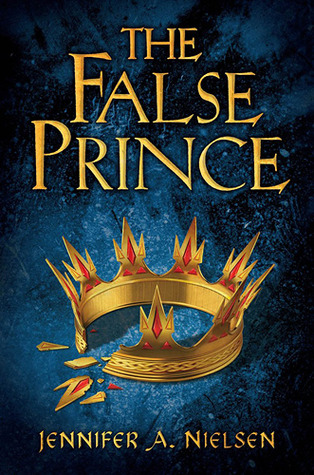
I decided to read a middle school book a friend of mine suggested: The False Prince by Jennifer A. Nielsen. It was a really good book, the first one in a trilogy (and I can't wait to read the second one), but...the topic was a bit more serious than I expected and wasn't pulling me out of the aching, sweet sadness I felt when reading the first book - my "main" book. I really did enjoy it, though, and - as my friend had said - the narrator of the story was my kind of witty character and I had a little 'character crush' on him.

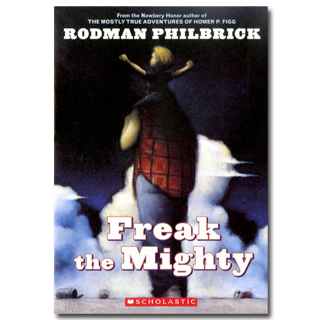
While I was now enjoying both books, I decided to pick up one more. My students and I had been to the library and viewed book trailers. I became interested in Freaky the Mighty by Rodman Philbrick. It isn't a new book, just a good one that's been around long enough to have a movie made about it back in 1998. I had never read the book and never seen the movie AND...it was the perfect size: small. That's right, one of the reasons I chose it was because it wasn't a big book. I didn't want to invest too much time in another book, I already had two other ones going. Remember, the intent was to use two for "break books" from my main one.

Needless to say, I found myself in another 'serious' story. Funny, sometimes? Yes. The False Prince also had its funny moments, and both middle school books had good narrators. I enjoyed both, though both were very different. While they did take my mind off of the first book, they did nothing to soothe my emotions. They were distractions and not cures. So, I finished both of the other books and have now focused my attention on finding a humorous adult book and a humorous young adult book for those times when I just have to close my main book and pull away from that ache it causes in my soul.

What book did I need a cure from? What kind of book was I reading (and I'm still reading it - not quite finished yet) that haunts me so much I look for other books to take my mind off of it? Paper Love: Searching for the Girl My Grandfather Left Behind by Sarah Wildman. And all I can say is - I am forever changed. I know that was the author's intent...with good reason.

Wildman's novel is a non-fiction book that starts out about a Jewish grandfather she loves and the story of his life - her family's story of his life - and how he successfully got himself and his family (his mother, sister, brother-in-law, and nephew) to America before Hitler took over Vienna. Her grandfather, Karl, has always been the "hero" of the family and the man everyone adores.

After his death, Wildman finds there is another story no one has told her. She discovers letters from a girl her grandfather knew before he came to America - old letters her grandfather had kept all through the years, some of them with photos in them. The letters begin to tell her only part of the story. She becomes determined to find this woman, Valy, and know the rest of the story. The author is driven by the desire to completely understand the kind of man her grandfather was before coming to America and who he really was as a human being.

Wildman goes on a research mission, a journey of discovery that takes her to several countries, to find this girl her grandfather had to leave behind. She travels to Europe to walk the streets her grandfather walked, to see and experience the things the girl talks about in her letters. As she uncovers more and more, and continues to read and re-read Valy's letters, her desire grows to find and know what happened to this incredible woman. Wildman takes us with her as she gets closer and closer to finding out the truth about this girl and her grandfather's past.


Valy & Karl, Vienna - 1936

It's an incredible journey. It's one I'm still on...


Friday, October 17, 2014

Lovely Lies

Believe it or not, I've never seen the movie "Memoirs of a Geisha." I don't know why this surprised friends of mine when I told them this recently, but it did. If you're wondering why the topic even came up, it's because when I was asked what I'm reading I told them Memoirs of a Geisha by Arthur Golden. Their first response was, "Didn't you see the movie?"


No. I didn't see the movie. Believe it or not, there are some movies I haven't seen. I especially avoid movies that were books first, to be honest. If I hear a movie is great, and find it was a book first, I go get the book. Books are always better because no director or actor or computer animation can come close to what my perfectly good brain conjures up when I read.

So, back to my current reading selection...

Actually, I just finished the novel. To be exact, I got up at three this morning...just so I could finish the book before I started my regular day. And, yes, I enjoyed it that much. I love the figurative language in the book. I also love that it's written as a first-person narrative. It is one of those books I have tabbed with several sticky notes to mark my favorite passages. I also find it to be quite a fascinating cultural and historical lesson.

When I closed the book at the end, I sat in my favorite reading chair and let it soak in. I smiled to myself and felt quite satisfied that it was a good read. I had enjoyed the characters, absorbed the surroundings the narrator had described throughout the book, and I was very glad I'd read the novel.

That feeling lasted a few precious moments...

And, then, although I wanted to fight it, my logical brain kicked in. My research brain gave a shout, too. Normally, this is something I like about myself, but just this once I wanted to let something go at face value,...but I wasn't able to do so. My brain just wouldn't allow it.

You see, I began making a connection between SO many similar stories. The first one that came to mind was the movie "Pretty Woman." I couldn't resist, I looked up the date of the movie - 1990. The date of the novel? 1997. While one is an American 'fractured fairy tale,' the Japanese one is too similar to ignore. It's simply set in a different country and a different time. Other than that, there really is no other differences worth mentioning.

I was tempted to hang on to what I was feeling, frustrated by a society that still tries to sell us a package of lies about what love and loyalty and 'happily ever after' should look like. I mean, if a prostitute and a geisha can find real love in this world, it shouldn't be that hard for everyone else, right? Yeah, right.

But I didn't. I didn't hang on to that feeling. I let it go...

While I know it's all lies, even I admit they're lovely ones. And, as long as I see them for what they are, there's no harm done if I indulge in little 'suspension of disbelief' now and then. Who wants to feast on a dose of reality all the time anyway? ;)

Happy reading!

Sunday, August 10, 2014

Mulling It Over

Have you ever read a book that you had mixed feelings about when you read it but, when you finished it, you just couldn't get it out of your mind? In other words, it's the kind of novel you learned to appreciate even more after you've had time to process all the different questions about life the novel brings to the table. Kate Atkinson's novel Life After Life is one of these and her book asks many questions about life, family, and history.

 
I chose to read this book because it was recommended by an author I respect. It was one of his top choices. I thought there must be something really great about it and, after reading the premise of the book, I found that it interested me. I think the quote in the front of the book intrigued me the most:
 
What if some day or night a demon were to steal after you into your loneliest
loneliness and say to you: "This life as you now live it and have lived it, you
will have to live once more and innumerable times more"...  Would you not
throw yourself down and gnash your teeth and curse the demon who spoke
thus? Or have you once experienced a tremendous moment when you would
have answered him: "You are a god and never have I heard anything more
divine." ~ Nietzsche
 

The novel is about Ursula Todd and how she repeats her life over and over, always hoping to get it right. While she isn't actually aware this is what she's doing, she does get 'feelings' or 'notions' about things. It is often labeled deja vu by those around her, while others think she may have 'the second sight' when, in fact, she's repeating her life over and tends to try to avoid the mistakes that ended her life (or someone else's) in her past life. She is always Ursula, always born to the same family, always on a snowy day in February 1910.
 
Much of the book surrounds World War II, but from different view points because she makes different choice and, therefore, takes a different path in each life. While some of her struggles haunt me, as the book clearly shows how one thing can change a person's life forever, it is the scenes during World War II that left the greatest impression on me. The writing about the war is superb and the descriptions are very vivid and realistic. 
 
I also need to mention there is a good bit of humor in this book. Ursula has a family and the book often showcases the family dynamic. It's the kind of family where you recognize members of your own family sitting around the Todd family table. There are plenty of witty and sarcastic scenes between characters, as well as some truly endearing moments. While I find the notion of reincarnation unbelievable (but enjoyable),...I found that I wholeheartedly believed in the characters.
 
I'm not sure this book is for everyone. I noticed the ratings for it are 3.5 to 3.7 on some major book review sites, even though it's a national bestseller and an award winner. So, I'll say this,...if you're a person who needs a complete story with a beginning, middle, and end, then this novel isn't for you. If you need everything wrapped up in a neat, little bow at the end of every book, you should skip this one. If, however, you're willing to try something a little different (and you should always be willing to try) and would like a story that leaves some things open for interpretation, give this one a chance. It IS a good story, it's just many stories about one life that never really ends.
 
After I was done with the novel, I found it wasn't done with me. I didn't intend to mull it over for as long as I have. In fact, I felt a little odd about it after I finished it. I knew the writing was good, I knew it had touched me, but I wasn't sure how I really felt about it until later when...someone would say something, or I would see something, and I found myself thinking about parts in the story. I still do.
 
I also wonder about what I would have done differently in my own life,...and what that says about me,...and what ripple effect it would have on other people's lives if I could go back and change just one moment. Would things turn out better? Would things turn out worse?
 
One of the characters in the book asks, "What if we had a chance to do it again and again, until we finally did get it right? Wouldn't that be wonderful?"
 
I don't know. Would it?


Sunday, August 3, 2014

Back to Books

I just finished reading another Kate Morton novel. It feels like it took me forever! Actually, it did take me quite awhile, but...I haven't read as much this summer as I usually do because I've been traveling and working on writing my own book. The fact that it took me longer than usual is no reflection on the author or the novel.

First let me say, I really like Morton's books. They are intricately entwined with multiple back stories, and she always ties up all the loose ends so nicely. I have a very busy mind, and her books insist that I stay focused on trying to figure out the mystery of the story. She keeps my mind from wandering when I read, which is one of the highest compliments I can give a writer.  I will be the first to say, though, her books are difficult to truly enjoy unless you read one consistently. I read two other books while reading this one, and I put it down for two weeks while I was gone on vacation. You have to pay attention in Morton's books, or you lose the thread that makes them so delicious. I had a few false starts before I really allowed myself to get in to the story. That isn't the authors fault, though, it's my own.

The Distant Hours is a good, solid story with more than one mystery to be solved. I loved the way it began with a child's scary story, which leads the reader into wanting to know the story behind the tale. In fact, I looked up the tale before I even went on with the novel. I thought it must be a real children's tale I'd never heard! I wanted to know more about it. Everything I searched, though, only turned up references to Morton's book. Of course, I couldn't find out more about it, only she could tell its story. She certainly got my attention. Such a clever woman!

Once I began getting in to the main story, I was - at first - a bit disappointed that the conflict of the story was set in motion by a letter which arrives...fifty years late. I thought it a bit...cliché. What I didn't know was Morton had a different spin on the 'letter from the past' showing up. Typically, when such letters show up in a novel or a movie, it's from an old lover. This is not the case in Morton's story.

As for the setting of the story, it is set in various parts of England and begins before World War I and goes up to the 1990s. The story revolves primarily around a castle, three sisters, and a lifetime of secrets. The father of the three sisters wrote the children's tale and, while he is not a main character in the story, his actions in the past leave a lasting impression on his daughters. The main character in the story, Edie, shows up at the castle to try to figure out the mystery behind the children's tale. Why she is the one who shows up to solve it...is a part of the mystery itself.

Finishing this last Morton novel means I have now read all of her published books to date. This is the last one for me to review. I enjoyed them all, except The House at Riverton. It wasn't a bad novel, just a long, rather tedious one. If you want to read why it is my least favorite Morton novel, you can read my post from November 29th, 2013, entitled "A Reluctant Review,"...which is exactly what it was.

My favorite Morton novel is still The Forgotten Garden. It is near and dear to my heart. I read so many books that I sometimes forget which is which, but this is not so with The Forgotten Garden. The story and its characters have found a permanent place in my reading soul, much like Jane Eyre. Some stories you never forget no matter how many books you read.


Sunday, April 6, 2014

"The Heart wants what it wants..."


"Once upon a time there was a boy who loved a girl, and her laughter was a question he wanted to spend his whole life answering." 


~ Nicole Krauss, The History of Love


I just finished this novel, and I really liked it. I will tell you, though, that it's one of those books you have to follow closely. The author, Nicole Krauss, takes fragmented pieces of people's lives and joins them together in an amazing way.

There are some books you can read and put down for awhile, then pick it up later. This isn't one of those. You need to keep the characters straight in your head and pay close attention. This is a thinking person's book. 

Do you assume all books are "thinking" ones? Ummm,...no. I can tell you about plenty of books that require very little thinking at all. You just get to sit back and enjoy the ride, so to speak. Everything is laid out for you, nice and neat, and you already know how it's going to end. (I consider those...boring.)

Not this one.

You need to work for this one.

It's good work, though. It's a good book. You should read it.

You know I don't like to give away the plot, in any way, but I will tell you a bit. The story revolves around an elderly Jewish man, Leo, who is telling a story that begins before World War II and ends in present day, but...he isn't the only one telling a story. The boy who loved the girl was Leo. He promised to always love her, did he keep his promise? There are times when you wonder where the story is going, but you must be patient. It is going somewhere. It is also a story within a story...and more than one story. And, of course, it's all about love - all kinds of love. 

For me, I don't mind how many characters or sub-plots a story has, as long as the author brings it all together in the end. I must feel satisfied when the journey is over.

This book satisfied me, stayed with me, and made me think. I loved it in a quiet way. I don't know how to say it any better than that.


Monday, August 12, 2013

Faerie Tale, Fiction, and Fact

I am often asked how I choose a book. This one attracted me because of the title and the picture on the cover, which...haunted me. I bought it, along with several other books, from Half-Price Books (second-hand books). I didn't read it right away, but I never put it on my bookshelf. I left it laying out where I could see it. I just knew I needed to read it...when I felt my heart was ready.

I began reading The True Story of Hansel and Gretel: A Novel of War and Survival by Louise Murphy a couple of weeks ago and finished it when I was on a plane to Italy last week. After I finished it, I had no desire to begin my next book right away. I wanted to think about the characters in the novel and what I'd learned from them. It was one of those books where I wanted to hold it in my hand and just marinate in the story. I knew my heart had to be ready for this journey into war, and I was right. 

I always find it difficult to suggest a book that talks about the horrors of war. It isn't an easy subject to read about, but I believe it's important to know about. We don't want history to repeat itself. I appreciate that, while the author had to write about a difficult topic, the scenes of horror were not overly done and too detailed. While the book refers to the story of Hansel and Gretel, this book is no faerie tale. However, like any life - no matter how difficult - it still has miraculous and magical moments.

The story is set in Poland during World War II. It begins when a Jewish family is running from the Nazis. The little brother and sister are sent into the forest alone by their father and stepmother in order to save the children's lives. The children are told they must forget their Jewish names to save themselves. No one must know they are Jewish. As they are told to run, the children panic and begin to worry what names they should use. The stepmother remembers an old faerie tale and the only "non-Jewish" names she can think of are Hansel and Gretel.


Once the parents send the children off into the woods, they go in the opposite direction - hoping to lure the Nazis away from Hansel and Gretel. This is where the children's journey begins and their journey is both difficult and wonderous. Even in the worst situations of war, children hope for the best and look for magic. They are, after all, children.

It is amazing how the author weaves the faerie tale of Hansel and Gretel into a historical fiction tale of war and survival. Murphy draws an amazing parallel between the fantasy story and the realities of war. I am so glad I read this book, even though it sometimes broke my heart. I wondered why I had never heard of it and no one had ever suggested it to me.

I read an interview with the author after reading the book. Murphy talks about the research she did into the Holocaust and how difficult a subject it was for her to write about. She stated that, while she is glad she wrote it - the story deserved to be told, she said she would never write about this topic again. It was just too difficult.

This novel is powerful and moving and, yes,...magical. How could it not be? After all, the love one human being has for another is a special kind of magic we can't see, but we know it's there when we see the sacrifices they make for each other - and the reality of how strong and resilient the human spirit can be, in the most difficult of times, is one of the most magical things in life.